We use cookies to make your experience better. To comply with the new e-Privacy directive, we need to ask for your consent to set the cookies. Learn more.

Sunbed Tube 'Buying Guide'

What type of sunbed are you re-tubing?
Canopy, Lay-Down, or Stand-up? A Canopy tanning bed requires RUVA. A Lay-Down tanning bed requires UVA and RUVA. A Stand-up tanning bed requires RUVA.
How long do you intend to stay under the tanning bed?
Choose between the super quick cleo ADVANTAGE tanning tubes (5-7 min tanning session), the cleo SWIFT tanning tubes (8-11 min tanning session) or the cleo PERFORMANCE tanning tubes (27-30 mins tanning session).
What Wattage Sunbed Tube?
Can I increase my wattage? – No! If your sunbed is designed for 100W tubes, you must use 100W tubes.
If you want faster tanning, you can choose tubes from a different range that suits your desired tanning speed, but always within the limits of your sunbed’s specifications.
Why? The sunbed tube is controlled by the sunbed’s ballast (control gear). If your sunbed has a 100W rated ballast and you install 160W tubes, the output will still only be 100W. This means you would spend more on higher wattage (160W) tubes that deliver no extra performance — completely unnecessary!
What is RUVA and UVA?
UVA is the standard type of sunbed tube.
RUVA is a sunbed tube with a built-in reflector, designed to provide a faster tanning effect.
Because RUVA tubes are more powerful, they are typically used in stand-up sunbeds and in the canopy (top section) of lay-down sunbeds. UVA tubes, which are less intense, are usually fitted in the base of lay-down sunbeds, where they are closer to the user.
When fitting RUVA tubes, the reflector (the darker side of the tube) should always be positioned toward the back of the machine.
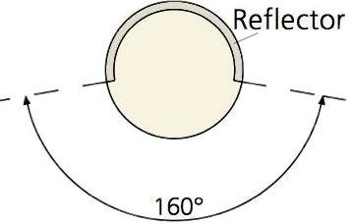
Which way around do I put the RUVA tube?
Hold the tube up to the window, you will see half the tube is dark, this is the reflector (the R in RUVA). This should be put towards the back of the sunbed, so the dark side is against the back wall and the lighter side faces towards the tanning area. The Philips/Isolde Cleo logo should be facing you.
Sunbed Tubes with black ends
It is important to understand that the dark deposits at the ends of the lamps do not reduce the tanning power of the lamp. This is because they occur at the lamp ends in an area where little UV radiation is produced. Even when the lamp becomes very dark at the ends, there is virtually no influence on tanning effectiveness. Salon operators can greatly reduce “end darkening” by changing their lamp starters at regular, prescribed intervals.
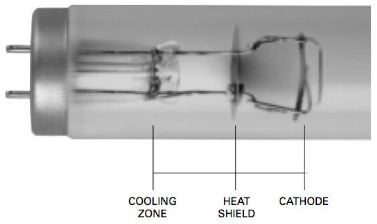
Why do I have to replace my sunbed tubes if they still light up?
Tanning lamps reach the end of their 'usable life' (when UV output has declined to a point where an effective tan cannot be obtained) much sooner than they reach the end of their physical life (when they stop lighting up). In other words, the lamp still lights, but it has lost its tanning effectiveness. All gas discharge lamps and this includes general lighting as well as tanning lamps, depreciate in output as they are operated.
Do I need to replace the sunbed tube starters as well?
Yes, it’s recommended to replace the starters whenever you replace the sunbed tubes. Starters are designed to support the proper ignition and operation of the tubes. Using old or worn starters can reduce the efficiency of the new tubes and may shorten their lifespan.
The job of the Sunbed Tube Starter is to offer fast and safe ignition to power up the sunbed tube. Once the tube is alight, it offers no further help. So if the old sunbed tube starters are powering up the old tubes they will probably continue to do so on the new set. However, old starters do cause sunbed tubes (new and old) to turn black at each end, this will not impact the tanning output as very little UV is produced near the lamp ends, but it might look unsightly. Sunbed Tube Starters are relatively cheap so it's just as well to install new when re-tubing.
How do I know when to replace my sunbed tubes?
This is a common question we get asked and the answer is straightforward - when they don’t tan you anymore!
Let us explain. Sunbed Tubes have a life expectancy measured in hours, often 500 or 800 hours depending on brand, maybe less for unbranded tubes but thats not something we sell so we won’t comment.
As an example, a new sunbed tube with a 500-hour life will need replacing once it has hit the 450-500 hours mark. The tanning performance will dramatically fall off once it gets to this point. At 500 hours (or once it has passed it useful life) the tube will remain alight and continue to fire up, the UV output, however, will be zero. From this point on the sunbed tube will act very much like a normal fluorescent tube, lighting up but not offering any UV performance. At some point, it will eventually die and go out. So just because a sunbed tube is still lighting up, does not mean the tube is still performing! If you have had the tubes since new then it should be obvious when they need replacing, as the tanning session (time spent under the sunbed) will extend and you will receive no tanning benefit.
If you’ve bought an old sunbed, a common but incorrect assumption is to replace only the “faulty” tubes that won’t light up. At first, this seems logical, just like replacing regular fluorescent tubes. However, as explained above, this is not correct: sunbed tubes that fail have already passed their useful life.
Replacing just a few tubes at a time can create an uneven tanning bed, with some tubes stronger than others… and you might end up looking like a zebra!
For this reason, sunbeds should always be re-tubed as a complete set. This ensures all tubes have the same life expectancy, providing an even tanning output across the entire bed.
If I order sunbed tubes will GB Bulbs fit them?
No sorry, just supply.
I've just bought a second-hand sunbed on eBay and I don't know if it needs new tubes?
99% of the time the sunbed tubes will need to be replaced. The sunbed has been sold cheaply because the sunbed tubes are ineffective, and the most expensive part of a domestic sunbed is often the sunbed tubes themselves. So yes they probably need renewing, but the only way to tell would be to use the sunbed - common sense must prevail when using a second-hand sunbed, start will a 5 min session and slowly increase.
The Sun Is Good For Us!
The soothing effect of sunbathing stems not only from the warmth and relaxation experienced but also from the energising effect of bright light; everyone knows the good mood that only a sunny summer's day can bring. In addition, small doses of UVB promote metabolic processes and stimulate the formation of Vitamin D3.
The sun thus gives rise to a wealth of positive effects:
- a boost in physical vitality
- the reinforcement of the body’s own defences
- an improvement in blood flow properties
- an improvement in oxygen supply to the body’s tissues
- advantageous mineral metabolism through improved supply of calcium, the prevention of bone disease (e.g. osteoporosis, osteomalacia)
Tanning Without Burning – How Does That Work?
The rays of the sun can, in addition to the desired tanning effect, also cause undesirable reddening of the skin, erythema, in its worst form, sunburn. For one-off sunbathing, the time required for tanning is actually longer than that required for skin reddening. Despite this, it is also possible to achieve a nice tan, without burning – quite simply by means of regular sunbathing. The reason for this is that the body reduces the preliminary stages of skin reddening relatively quickly, while the tan constantly builds itself up through repeated exposure. On the sunbed, the exact intensity of the UV light is known. Consequently, the tanning plan can be adjusted to ensure that the individual stops before burning starts and then that a good tan is built up through repeated exposure.
Pre-Holiday Tanning
It’s the summer time and you may be planning to spend a lot of time outdoors on your summer holiday. Remember that it’s important to develop a base tan and schedule enough time to develop it gradually. Moderate exposure to ultraviolet light helps develop a natural barrier in the skin to protect the body from future exposures to UV light; it increases your tolerance to UV. Ultraviolet light stimulates the production of melanin which then surrounds the core of cells to protect the DNA. This melanin substance absorbs and/or scatters radiation. In addition, exposure to ultraviolet light thickens the epidermis (the top skin layer), thereby limiting the amount of UV which could penetrate the lower skin layers. If this photoprotection (base tan) is not developed or a sunscreen is not used, sunburn can occur and the DNA of the skin cells may become damaged. Repeated sunburn can result in damaged cells. Therefore, it’s wise to use a broadband sunscreen while exposed over a prolonged period of time or in sun-intensive regions. Skin damage may occur if a person overexposes the skin to UV or combines exposure indoors with too much exposure to the natural sun. One should always be mindful of the dangers of overexposure, as it may lead to chronic skin damage. Your tan will disappear or fade over time without repeated exposure to UV light. This is because the pigmentation process occurs in the epidermis, the top skin layer. The epidermis replaces all its skin cells every 28 – 30 days. Cells in the inner portion of the top skin layer divide themselves, migrate to the surface, gradually die and slough off. Skin cells contain melanin which is darkened as a result of UV exposure. If a person stops tanning for an extended period of time, they will probably have to start at the beginning using the recommended exposure schedule for their skin type. Subsequent session times may be gradually increased, leaving at least 48 hours between each exposure. This schedule assumes, however, that no unusual reaction or sunburn occurs. If you decide to use a spray booth or self-bronzer for that “immediate” tanned look, remember that these sources do not provide a natural barrier, or photoprotection, and will leave you susceptible to obtaining a sunburn when going outside or are otherwise exposed to UV light. Moderation is the key and always use an SPF when outside for extended periods of time.
Here are a few basic tanning tips before heading outside:
- UVB irradiance is greatest between 10:00am and 2:00pm. UVA continues throughout the day and can exceed that of UVB by 10 to 1,000 fold. In the northern hemisphere, UVB is most intense in summer months, but UVA is more consistent throughout the year.
- SPF stands for “Sun Protection Factor” (maybe it should stand for Sunburn Protection Factor) and is the standard means of expressing a sunscreen’s effectiveness in protecting the skin. It represents a ratio of the minimal erythemal dose (MED) to the Med on unprotected skin. The SPF value is the length of time a person can be exposed to UV without burning when a sunscreen is applied compared to when it is not. For example, an SPF of 15 means one can be exposed 15 times longer with a sunscreen than without it. Your skin alone has SPF 1.
- Sunscreen chemical agents are divided up into three groups: those which absorb UVA, those which primarily absorb UVB and those which absorb both wavelengths. It is preferable to select broadband or full-spectrum sunscreens, as they protect against both UVB and UVA penetration. They will also help prevent the cumulative damage of photoaging (wrinkling) and can minimise photosensitivity reactions, both of which can be caused by UVA.
- Sunblocks are opaque formulations which absorb, reflect and scatter up to 99% of both UV and visible light. They are often used on localised, sun-sensitive areas such as the nose, lips, ears and shoulders. Because they are often messy and may stain clothing, sunblocks may not be practical for application over large areas. An example of a sunblock is zinc oxide.
- On the other hand, sunscreens absorb specific wavelengths and are classified as drugs by the FDA. Sunscreens are considered more cosmetically refined due to their pleasing consistency and are, therefore, typically used for effective photoprotection.
- So remember, when outdoors, the sun is the strongest between 10:00 am and 2:00 pm. It is wise to use a broadband sunscreen while exposed over a prolonged period of time or in sun-intensive regions. One should always be mindful of the dangers of overexposure, as it may lead to skin damage. And don’t forget to visit your local tanning salon to work on your base tan before hitting the beach - have a great holiday!
Are Sunbeds Safe?
Sunbeds give out ultraviolet (UV) rays that can cause skin cancer. Many sunbeds give out greater doses of UV rays than the midday Mediterranean sun.
The risks are greater for young people. Evidence shows that:
- People who have excessive exposure to UV rays before the age of 20 have a greater risk of melanoma later in life
- Sunburn in childhood can greatly increase your risk of developing skin cancer later in life
It is now illegal for under-18s to use sunbeds. The Sunbeds (Regulation) Act, which came into force in April 2011, prevents those under 18 from:
- being allowed to use tanning salons and sunbeds at premises including beauty salons, leisure centres, gyms and hotels
- being offered the use of a sunbed
- being allowed to be in an area that is reserved for sunbed users
UV rays from sunbeds. Sunbeds, sunlamps and tanning booths give out the same type of harmful radiation as sunlight:
- UVA rays make up about 95% of sunlight. They can cause your skin to age early, making it look coarse, leathery and wrinkled.
- UVB rays make up about 5% and cause your skin to burn.
A tan is your body's attempt to protect itself from the damaging effects of UV rays. Getting a tan using a sunbed is not safer than tanning in the sun. In some cases, it may be more harmful, depending on, for example:
- The strength (dose) of UV rays from the sunbed
- How many times or how often you use a sunbed
- How long your sessions are
- What type of skin you have, such as fair or dark
- Your age
Currently, there is no regulation that governs the type or strength of UV rays that sunbeds give out.
Damage from UV rays. Prolonged exposure to UV rays increases your risk of developing malignant melanoma, the most serious form of skin cancer. You cannot always see the damage that UV rays cause. The symptoms of skin damage can take up to 20 years to appear. UV rays can also damage your eyes, by causing problems such as irritation, conjunctivitis or cataracts, particularly if you don’t wear goggles.
Advice about using sunbeds
The Health and Safety Executive (HSE) has issued advice on the health risks linked to UV tanning equipment, such as sunbeds, sunlamps and tanning booths. They recommend that you should not use UV tanning equipment if:
- you have fair, sensitive skin that burns easily, or tans slowly or poorly
- you have a history of sunburn, particularly in childhood
- you have lots of freckles and/or red hair
- you have lots of moles
- you are taking medicines or using creams that make your skin sensitive to sunlight
- you have a medical condition that is made worse by sunlight
- you have had skin cancer, or someone in your family has had skin cancer
- sunlight has already badly damaged your skin
The HSE advice also includes important points to consider before you decide to use a sunbed. For example, if you do use a sunbed, the operator should advise you on your skin type and on how many minutes you should limit your session.
'Are Sunbeds Safe' information from the NHS Sunbed and tanning safety.
Skin Types For Sunbed Tubes
| Skin Type | Characteristics | Sensitivity | Tanning Time |
|---|---|---|---|
| SKIN TYPE 1 | Reddish hair Light coloured eyes Very light complexion Often with freckles |
Extremely sensitive Immediate sunburn 2% of central Europeans |
5 - 10 minutes |
| SKIN TYPE 2 | Blonde to brown hair Blue, green or grey eyes Light complexion Often with freckles |
Sensitive Almost always sunburn 12% of Central Europeans |
10 - 20 minutes |
| SKIN TYPE 3 | Dark blonde to chestnut hair Grey or brown eyes Medium complexion Very few or no freckles |
Normal sensitivity Sometimes sunburn 78% of central Europeans |
20 - 25 minutes |
| SKIN TYPE 4 | Dark brown to black hair Dark coloured eyes Brown or olive complexion No freckles |
Very resistant | Approx 45 minutes |
Other Common Questions People Ask Us About Sunbed Tubes
| Question | Answer |
|---|---|
| Are your Philips Cleo 100W tubes compatible with Ergoline stand-ups? | Yes – same bi-pin, same 0.3 W/m². Hundreds of salons switch to Cleo every year. |
| Can I fit 160W tubes in my Philips HB555 if it says 100W on the side? | No – the ballast is locked to 100W output. 160W tubes will underperform. Use Cleo Advantage 100W-R for a perfect fit and full power. |
| Why do Cleo Advantage 100W tubes make me burn in 6 minutes when the box says 8-minute max? | Advantage tubes are high-UVA. Start at 5 minutes for the first 3 sessions with SPF 30, then step up to 7. Every new user over-tans on day one. |
| Will 176 cm sunbed tubes work in my Hapro if the old ones were 180 cm? | Yes – 176 cm pin-to-pin is the EU standard since 2005. Measure the metal pins only (not plastic caps) – 99 % of Hapro beds match. |
| How many hours until Ergoline Prestige 1600 tubes drop 20 % power with 48 lamps? | 800 hours on Cleo Swift. |
| Best tube for pale skin that freckles: Cleo Performance 24-min or Swift 8-min? | Start with Performance (24-min) – zero burns, builds base tan in 3 visits. Then swap half the bed to Swift for faster bronze. |
| Which way do reflector sunbed tubes face – stripe to the back or front? | Dark reflector stripe to the back wall, Philips logo facing the client. |
| Replaced Cosmedico 100W tubes but half the bed won’t light – what’s wrong? | 99 % chance it’s the starter. Swap to the K11 starters. |
| Should I replace all 36 tubes at once in my vertical sunbed or just the dim ones? | Replace all 36 together – mixed ages cause stripey tans. |
| If the Philips sunbed tubes say 800 hours, will they still tan at 800 hours? | Yes – Cleo tubes retain 94 % output at 800 hours. |
Which Sunbed Tubes Should I Buy?
The table below provides a complete overview of the Philips Cleo range of sunbed tubes available from GB Bulbs. It includes all current Performance, Swift / Professional, and Advantage models, showing their wattage, tube type (UVA or RUVA), length, tanning speed, price, and the recommended sunbed tube position. Correct as of November 2025.
| Product Name | Wattage | Tube Type | Length / Size | Tanning Speed | Price | Sunbed Tube Position |
|---|---|---|---|---|---|---|
| Philips Cleo Performance Sunbed Tubes 5 ft (4′11″) 80 W UVA | 80 W | UVA | 5 ft (4′11″) | 24-27 mins | £16.40 | Bottom canopy sunbed |
| Philips Cleo Performance Sunbed Tubes 5 ft (4′11″) 80 W RUVA | 80 W | RUVA | 5 ft (4′11″) | 24-27 mins | £19.30 | Top canopy / stand-up sunbed |
| Philips Cleo Performance Sunbed Tubes 6 ft (5′9″) 100 W UVA | 100 W | UVA | 6 ft (5′9″) | 24-27 mins | £17.99 | Bottom canopy sunbed |
| Philips Cleo Performance Sunbed Tubes 6 ft (5′9″) 100 W RUVA | 100 W | RUVA | 6 ft (5′9″) | 24-27 mins | £19.20 | Top canopy / stand-up sunbed |
| Philips Cleo Swift Sunbed Tubes 5 ft (4′11″) 80 W RUVA | 80 W | RUVA | 5 ft (4′11″) | 8-11 mins | £19.80 | Top canopy sunbed |
| Philips Cleo Swift / Professional Sunbed Tubes 6 ft (5′9″) 100 W UVA | 100 W | UVA | 6 ft (5′9″) | 8-11 mins | £18.80 | Bottom canopy sunbed |
| Philips Cleo Swift / Professional Sunbed Tubes 6 ft (5′9″) 100 W RUVA | 100 W | RUVA | 6 ft (5′9″) | 8-11 mins | £20.40 | Top canopy / stand-up sunbed |
| Philips Cleo Advantage Sunbed Tubes 6 ft (5′9″) 100 W UVA | 100 W | UVA | 6 ft (5′9″) | 5-7 mins | £20.30 | Bottom canopy sunbed |
| Philips Cleo Advantage Sunbed Tubes 6 ft (5′9″) 100 W RUVA | 100 W | RUVA | 6 ft (5′9″) | 5-7 mins | £21.99 | Top canopy / stand-up sunbed |